How to Find the Best Checking Account in 2025: A Complete Guide
A checking account is the financial workhorse of your daily life—it's where your paycheck lands, how you pay bills, and the tool you use for everyday purchases. But with thousands of banks, credit unions, and online-only financial apps vying for your business, the phrase "best checking account" can feel misleading. There is no single best account for everyone. The right choice depends on your spending habits, your tolerance for fees, and how much you value in-person service versus digital convenience. In this guide, we break down what to consider, the hidden costs to avoid, and how to pick a checking account that works with your money, not against it.
What Makes a Checking Account "Best"?

Before comparing accounts, you need to understand the key features that separate a good checking account from a great one. Here are the factors that matter most:
- Monthly maintenance fees: Many traditional banks charge $10–$15 a month just for having an account. The best accounts either have no monthly fee or waive it with a minimum balance, direct deposit, or another easy condition.
- ATM access: Free withdrawals at a wide network of ATMs are essential. Look for surcharge-free ATM networks or banks that reimburse out-of-network ATM fees.
- Overdraft fees: Average overdraft fees hover around $35 per occurrence. Some banks now offer overdraft protection, charge no fees, or let you opt out entirely.
- Interest rate (APY): While most checking accounts pay little or no interest, some high-yield checking accounts offer rates that rival savings accounts. If you keep a significant balance, even a modest APY can earn you money.
- Mobile app and online banking: Today, you need a reliable app for mobile check deposit, bill pay, peer-to-peer transfers, and instant alerts. User-friendly digital tools can save you hours every year.
- Branch access vs. online only: If you frequently deposit cash or prefer face-to-face help, a physical branch network matters. If you're comfortable with digital banking, online banks typically offer lower fees and higher rates.
- FDIC/NCUA insurance: Always verify that your funds are insured up to $250,000 by the FDIC (for banks) or NCUA (for credit unions). This protects you if the institution fails.
- Sign-up bonuses: Many banks offer cash bonuses (often $100–$300) for opening a new account and meeting direct deposit requirements. These can be attractive, but don't let a bonus substitute for evaluating ongoing fees and terms.
Checking Account Fees: The Biggest Hidden Costs
Even if an account looks free at first glance, fees can quietly erode your balance. Here's a breakdown of the most common charges and how to avoid them:
- Monthly service fees: A typical big-bank checking account charges $10–$15 per month if you don't meet a minimum balance or have direct deposit. Over a year, that's $120–$180—unnecessary if you can find a no-fee account.
- Overdraft and nonsufficient funds (NSF) fees: Banks charge roughly $35 when you spend or write checks without enough money. These fees are not one-time: you can be hit multiple times in a single day. Opting out of overdraft coverage prevents the fee but means transactions will be declined.
- ATM fees: Using an out-of-network ATM costs $2–$5, and your own bank may charge an additional fee on top. Frequent ATM users should prioritize accounts with large surcharge-free networks or reimbursement programs.
- Minimum balance fees: Some accounts charge a penalty if your balance falls below a set amount. Read the fine print to avoid surprises.
- Foreign transaction fees: If you travel internationally, many banks charge 1%–3% on debit card purchases or ATM withdrawals abroad. Travelers should look for accounts with no foreign transaction fees.
To find the best checking account, add up potential fees based on how you actually use your money. A "free" account with poor ATM coverage could cost you more than one with a monthly fee and a generous network.
High-Yield Checking Accounts: Are They Worth It?
High-yield checking accounts pay a significantly higher interest rate than typical checking accounts. Some rates are competitive with online savings accounts, especially for balances up to a certain limit. However, these accounts usually come with conditions:
- Direct deposit requirement: You typically must have a monthly direct deposit of at least $500–$1,000 to earn the highest APY.
- Minimum debit card transactions: Many high-yield accounts require 10–15 debit card purchases per month to qualify for the bonus rate. If you miss the quota, your rate drops dramatically.
- Electronic statements: You may need to get e-statements instead of paper statements.
- Balance caps: Some accounts apply the high rate only to balances under $10,000 or $25,000; anything above earns a much lower rate.
Despite these hoops, high-yield checking can be a smart place for your emergency fund or an active spending balance. Compare the effective annual yield after considering your ability to meet the requirements. If you won't hit the transaction thresholds, a fee-free standard checking account plus a high-yield savings account may be more practical.
Online vs. Traditional Banks: Pros and Cons
The biggest decision in checking accounts is whether to go with an online-only bank, a traditional brick-and-mortar bank, or a credit union. Each has trade-offs.
Online banks (such as Ally, Discover, and Chime) offer:
- Higher APYs and lower fees because they don't maintain branches.
- Nationwide ATM networks, often reimbursing third-party fees.
- Robust mobile apps and 24/7 phone support.
- No branch access—cash deposits can be inconvenient, and you can't visit a teller.
Traditional banks (such as Chase, Bank of America, and Wells Fargo) offer:
- Extensive branch networks and in-person customer service.
- Wide ATM networks (though their own ATMs only; fees for others).
- Physical safe deposit boxes and notary services.
- Often lower APYs and higher monthly fees unless you meet balance requirements.
Credit unions are not-for-profit institutions owned by their members. They typically offer:
- Lower fees and better rates than big banks.
- Community-based services and personalized support.
- Access to a shared branching network, making branches available nationwide.
- Membership requirements based on where you live, work, or belong to an organization.
A hybrid approach also exists: many banks now merge online convenience with physical branches. If you rarely use cash, an online bank may be the best checking account for you. If you rely on in-person service, a credit union or a traditional bank with a strong fee-waiver policy could be a better fit.
How to Avoid Common Checking Account Pitfalls
Even after choosing an account, mistakes can cost you. Avoid these common traps:
- Ignoring account alerts: Without text or email alerts for low balances and large transactions, you risk overdrafts and fraud. Set up alerts on day one.
- Signing up for overdraft protection that isn't free: If your bank links your checking account to a savings account or line of credit, transfers may trigger fees. Know the transfer fee before you rely on it.
- Using your debit card for daily spending without tracking: Small purchases add up quickly, and an unexpected automatic payment can tip you into the red.
- Failing to shop around later: Your needs change. A checkless online account might not work once you start receiving paper paychecks. Review your account's fees and features at least once a year.
- Choosing an uninsured institution: Some fintech "banks" are not banks at all—your funds may be stored with a partner bank. Confirm that the app has actual bank partners and FDIC insurance, or your money may not be protected under the same rules.
How to Open the Best Checking Account for You
Follow these steps to confidently open a checking account that meets your needs:
- Assess your banking habits. Calculate your average balance, how many debit purchases you make, how often you use ATMs, and whether you deposit cash regularly. This tells you which features are non-negotiable.
- Compare multiple accounts. Use Bankrate, NerdWallet, or your credit union's website to compare fees, rates, and perks. Read the fee schedule carefully, not just the highlighted offers.
- Check the requirements. Does the account demand direct deposit, a minimum opening deposit, or a monthly spending goal? Make sure you can comfortably meet them.
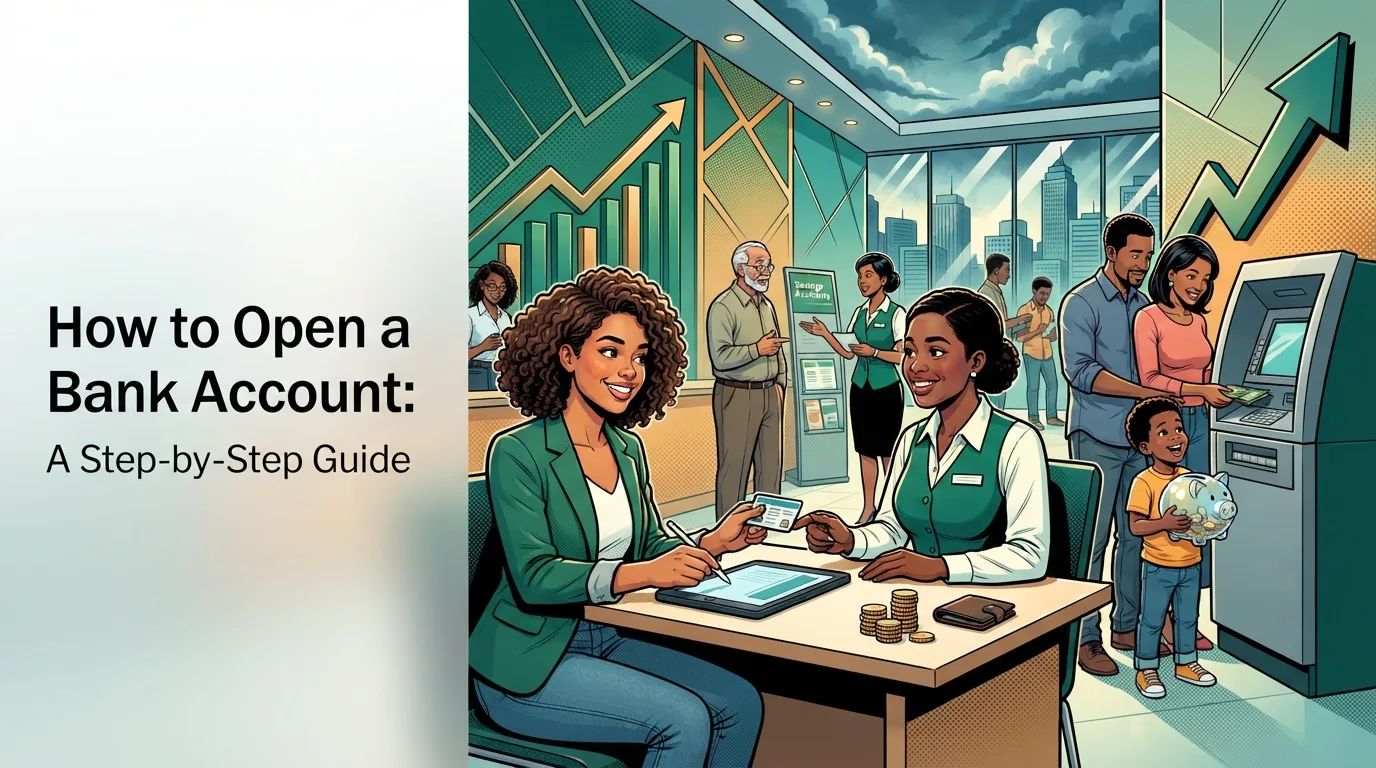
- Gather your ID and paperwork. For most U.S. accounts, you'll need a U.S. government-issued ID (driver's license or passport), your Social Security number, and proof of address. Some apps require only a selfie and an ID.
- Apply online or in person. You can often open an account in minutes. Be ready to make an initial deposit, which could be as low as $0 or as high as $100.
- Fund the account and set up direct deposit. Note that sign-up bonuses may take 60–90 days to arrive.
- Set up online banking and alerts. Change your PIN, activate mobile deposit, and link payment apps. Verify that your login security features (two-factor authentication, biometric login) are enabled.
Whether you choose an online bank with no fees or a branch bank with a generous sign-up bonus, the "best" checking account should make managing your money easier, more affordable, and more secure. Take your time, compare offers, and don't settle for an account that charges you for every mistake.
Bottom Line
The best checking account isn't a one-size-fits-all product. It's the account that aligns with your daily routine, avoids unnecessary fees, and grows your money where possible. Start by evaluating your needs, researching fee structures, and being realistic about how you'll use the account. Whether you prioritize high interest, ATM access, or personal service, there's a checking account out there that fits your financial life—and you don't have to accept anything less.
Frequently Asked Questions
What are the most important factors to consider when choosing a checking account?
Focus on monthly fees, ATM access, overdraft policies, interest rate, mobile app quality, and whether the account is insured by the FDIC or NCUA. Also consider sign-up bonuses and whether you need physical branch access.
Do high-yield checking accounts have any catch?
Yes. They usually require monthly direct deposits and a certain number of debit card purchases to earn the high rate. If you miss the requirements, the APY drops significantly, and many have balance caps.
Can I get a checking account with no monthly fee?
Many online banks, credit unions, and even traditional banks offer no-fee checking. You may need to agree to direct deposit, electronic statements, or maintain a minimum balance—but fee-free options are widely available.
References