How to Save Money Fast: 11 High-Impact Strategies That Actually Work
If you're wondering how to save money fast, you're not alone. A 2022 Federal Reserve survey found that roughly 40% of U.S. adults would struggle to cover a $400 emergency expense with savings alone. Whether you're facing an unexpected car repair, a medical bill, or just want a larger cushion, the right moves can free up cash in a matter of days—not months. This guide walks you through 11 proven strategies, from quick expense cuts to simple income boosts, so you can see real progress this week.
1. Audit Your Spending with Ruthless Precision
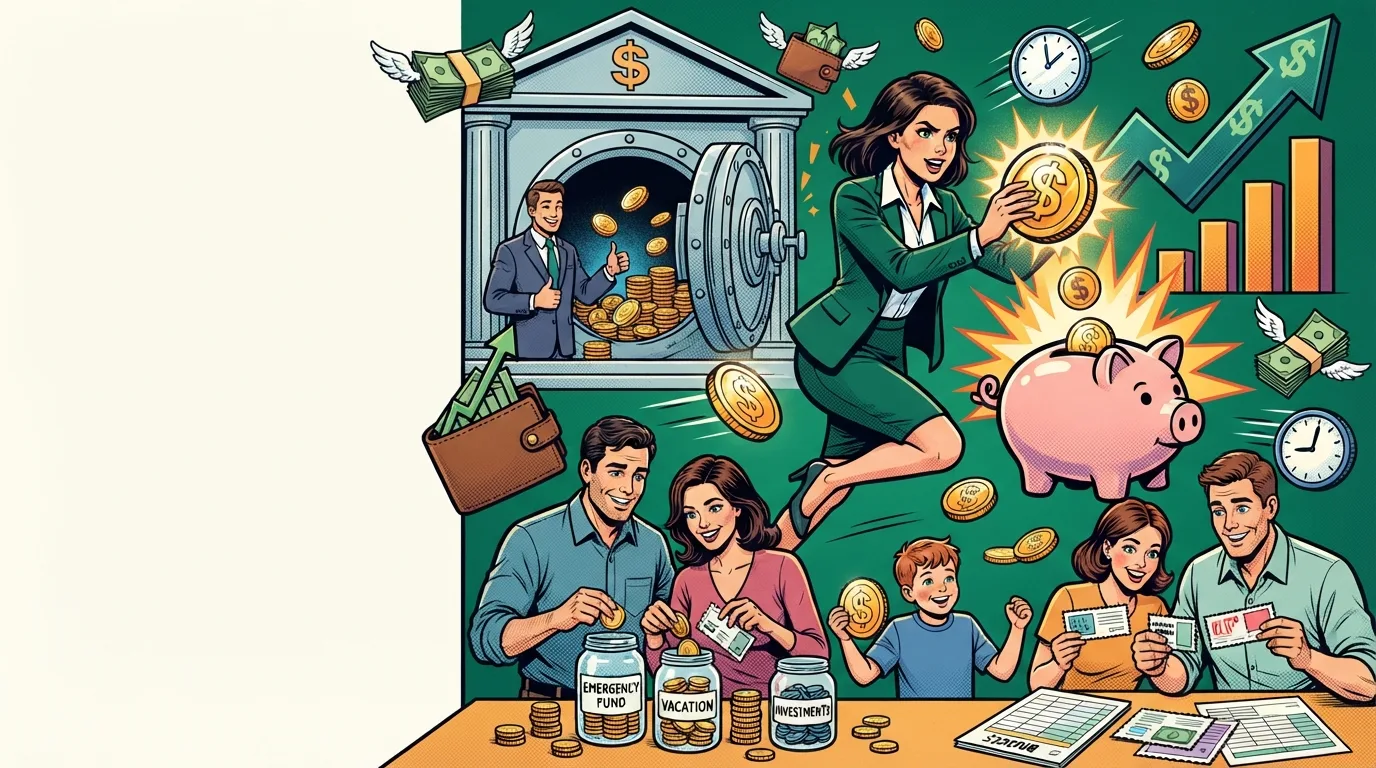
The first step to saving fast is knowing exactly where your money goes. Open your last three bank and credit card statements and categorize every purchase: housing, utilities, groceries, dining, subscriptions, transportation, and misc. Look for patterns you don't recognize—those $4 coffee stops and overlapping streaming services add up quickly.
- Use a simple spreadsheet or a budgeting app like Mint or YNAB.
- Highlight every expense that isn't absolutely necessary.
- Total all “autopilot” charges—subscriptions, insurance, memberships—and calculate what you could cut.
This audit doesn't need to be perfect. The goal is to identify five to ten items you can eliminate or reduce by the end of the week.
2. Cut Fixed Costs Immediately
Fixed costs are the biggest levers for fast savings. A single 30-minute phone call can save you hundreds a year.
- Call your service providers. Ask internet, phone, and insurances about current promotions or loyalty discounts. Companies often have retentions departments than can lower your bill if you mention a competitor's price.
- Cancel unused subscriptions. Use a tool like Rocket Money or manually scan for anything you haven't used in 30 days. Streaming, gym memberships, app subscriptions—those $10–$50 monthly charges become real savings when canceled.
- Renegotiate insurance. Compare auto and renter's/home insurance rates at least once a year. Even a 5% discount on your premium is cash in your pocket.
- Refinance high-interest debt. If you have credit card balances, a 0% balance transfer card can stop interest from piling up and free up more money to save.
You can complete most of these actions within a day. The savings start the very next month.
3. Launch a No-Spend Challenge
A no-spend challenge is a simple but powerful method: pick a set period—three days, a week, or a month—and cut all non-essential spending.
- Set clear rules. Essentials like rent, utilities, groceries, transportation, and healthcare are allowed. Eating out, new clothes, entertainment, and impulse buys are off-limits.
- Plan your meals. Make a list and stick to it. Cooking at home for a week can save an average of $50–$100 per person compared to eating out.
- Use the 24-hour rule. For any non-essential purchase, wait 24 hours before buying. Most wants fade with time.
- Find free alternatives. Swap movie tickets for a park, fitness classes for home workouts, and coffee shop visits for portable coffee.
One no-spend week can easily free up $100–$200. That's real money you can transfer to savings immediately.
4. Automate Your Savings and Pay Yourself First
Automation takes willpower out of the equation. When you pay yourself first, you save before you have a chance to spend.
- Set up a direct deposit split. Ask your employer to divert a specific amount—even $25 per paycheck—directly into a separate savings account.
- Schedule automatic transfers. On payday, move a fixed amount from checking to savings. Even if it's just $10, the habit builds momentum.
- Use round-up apps. Apps like Acorns or Chime round up purchases to the nearest dollar and sweep the change into savings. Those daily reminders can surprise you with an extra $30–$50 a month.
Out of sight, out of mind. You'll adjust your spending to the lower balance and your savings will grow steadily.
5. Generate Quick Cash by Selling and Side Gigs
Saving fast isn't only about spending less—it's also about boosting income. A weekend declutter session can bring in immediate cash.
- Sell unused items. List clothes, electronics, furniture, and books on Facebook Marketplace, eBay, Poshmark, or Mercari. You can often turn $300–$500 of clutter into cash quickly.
- Use local buy/sell/trade groups. These are often faster than online marketplaces because buyers pick up locally.
- Pick up a gig. Start with a flexible side hustle: ride-sharing, food delivery, pet sitting, or virtual tutoring. Even 5–10 hours a week can add $100–$300 to your savings.
- Turn a hobby into income. If you craft, bake, or do photography, sell your work online or to your network.
The key is to move fast—list items today and schedule gigs for the coming week.
6. Optimize Your Banking and Debt Interest
Your savings and debt accounts affect your bottom line more than you think. A high-yield savings account (HYSA) can earn you five times more interest than a traditional one.
- Switch to a high-yield savings account. Online banks like Ally, Marcus, or Discover offer rates around 4–5% APY (as of early 2025), compared to the national average of 0.46%. On a $1,000 balance, that's a meaningful difference.
- Pay off high-interest credit cards first. The average credit card APR is over 20%. Paying off a $500 balance saves you roughly $100 in annual interest—an immediate return.
- Apply for a balance transfer card. If you can move debt to a 0% intro APR card, use the interest-free window to pay down principal faster.
- Check your bank fees. Overdraft fees, monthly maintenance fees, ATM fees—these nickel-and-dime you. Switch to a fee-free bank if necessary.
These changes take under an hour and can improve your cash flow every single month.
7. Use the 24-Hour Rule to Stop Impulse Spending
Impulse purchases are a major drain on take-home pay. The 24-hour rule is a simple, research-backed way to curb spending:
- When tempted to buy something non-essential, wait 24 hours. Put it in your online cart or write down the item.
- If after 24 hours you still want it—and you can afford it—you can buy it. But you'll often find the urge fades.
- Unsubscribe from retail emails and remove saved payment methods to add friction.
This rule alone can save the typical overspender $100–$200 a month without feeling deprived.
Bottom Line
Saving money fast is less about extreme restriction and more about intentional action. Start with an expense audit, cut recurring costs, launch a no-spend challenge, automate transfers, and sell what you don't need. Even three or four of these strategies can generate hundreds of dollars within two weeks. The key is to shift extra cash into a separate savings account before you can spend it. Once you see your balance grow, the momentum will carry you forward.
Remember: the best time to start was last month. The second-best time is right now. Pick one action from this list and do it today.
Frequently Asked Questions
What is the fastest way to save money?
Audit recurring bills, cancel unused subscriptions, and set up an automatic transfer to a savings account. Also sell unused items this week—decluttering can generate fast cash.
How much should I aim to save in a month?
Start with a specific dollar amount, like $500, rather than a vague percentage. If that's too aggressive, focus on eliminating one fixed cost, like a subscription, and saving the difference.
Can I save money fast on a low income?
Yes. Small changes—meal planning, a no-spend week, and negotiating bills—can generate meaningful savings even on a tight budget. Prioritize saving before discretionary spending.
References