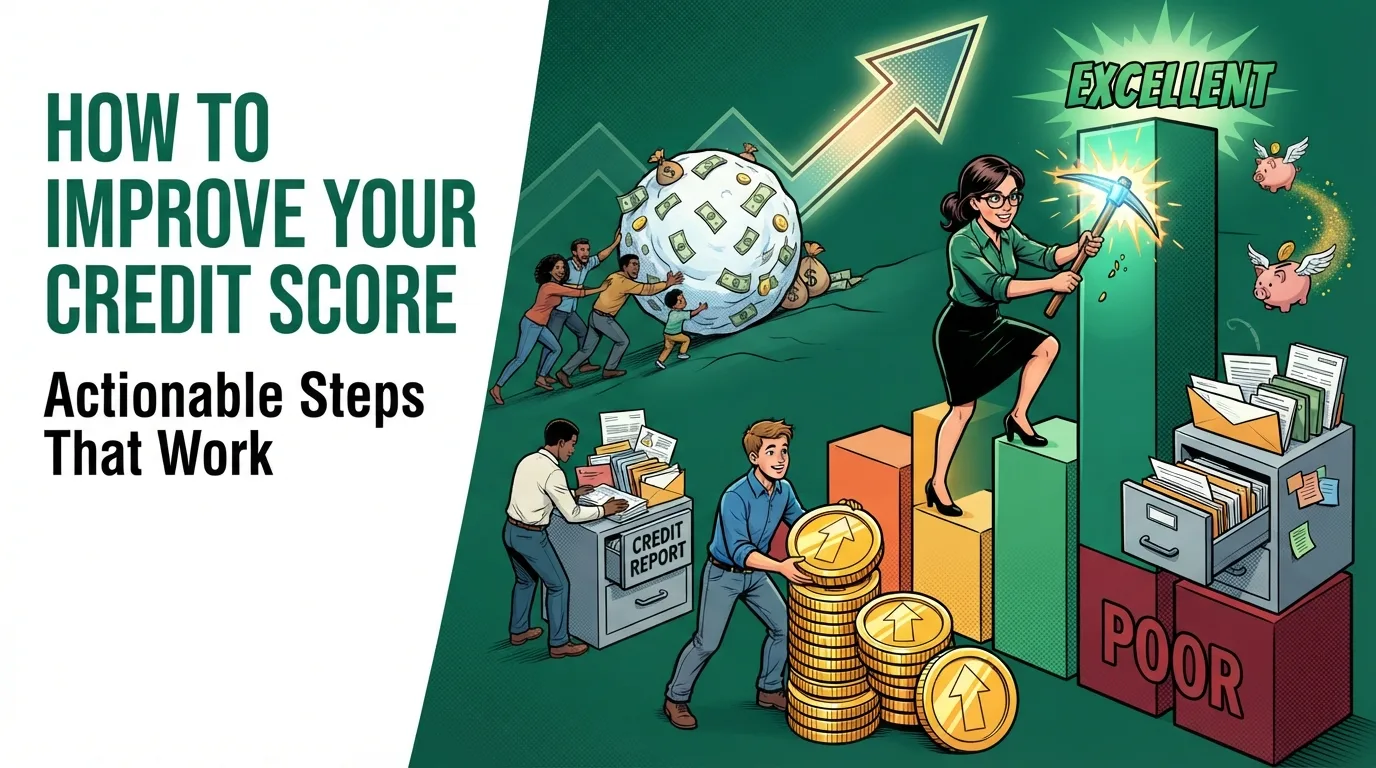
How to Check Your Credit Score: A Step-by-Step Guide
Your credit score is a three-digit number that can shape your financial life. It influences whether you get approved for a mortgage, car loan, or credit card, and it directly impacts the interest rates you'll pay. Yet millions of Americans don't know their own score. Checking your credit score is simple, free in most cases, and doesn't hurt your credit. This guide shows you exactly how to do it, where to get the most accurate numbers, and how to interpret what you see.
Why Check Your Credit Score?

Regularly checking your credit score is not just about curiosity—it's a core part of maintaining your financial health. Here's why it matters:
- Catch errors early: Credit report errors are common. A 2023 Federal Trade Commission study found that 1 in 5 consumers had an error on at least one credit report. Errors can drag down your score and lead to loan denials. Checking your score and reports helps you spot and dispute mistakes.
- Detect identity theft: An unexpected drop in your score or accounts you don't recognize could signal fraud. Early detection limits the damage.
- Know your borrowing power: Before applying for a loan or credit card, knowing your score gives you an idea of what you'll qualify for. It also helps you negotiate better terms.
- Track your progress: If you're working to improve your credit, regular checks show whether your efforts are paying off.
The Best Ways to Check Your Credit Score for Free
There are two distinct things you should keep in mind: your credit score (a numerical rating) and your credit report (the detailed history). Both are important. Fortunately, you can access both for free.
Free Credit Reports
Under federal law, you are entitled to a free copy of your credit report every 12 months from each of the three major credit bureaus: Experian, Equifax, and TransUnion. The only official source is AnnualCreditReport.com. That site allows you to request all three reports at once or stagger them throughout the year (for example, one every four months) to keep an eye on changes.
When you get your report, it will not include your credit score. To see your score, you'll generally need to use a different service or purchase it from a bureau.
Free Credit Score Services
Many legitimate companies offer free credit scores without requiring a credit card or purchase. These services typically give you a VantageScore, which is a scoring model developed by the three bureaus. While lenders often use FICO scores, the VantageScore is still a useful indicator of your credit health.
- Credit Karma: Offers free VantageScore scores and reports from Equifax and TransUnion. It also provides credit monitoring and educational tools.
- Credit Sesame: Similar to Credit Karma, offering a free VantageScore and basic monitoring.
- NerdWallet: Provides a free credit score with TransUnion data and updates weekly.
- Experian free membership: Gives you a free FICO Score 8, which is one of the most used FICO models. You'll see your Experian report and score.
All of these services use a soft inquiry when you check your score, which does not affect your credit. You can use them as often as you like.
How to Check Your Credit Score Through Your Bank or Credit Card
Many major banks and credit card issuers now offer cardholders and customers free access to their FICO score. This is valuable because FICO scores are used in about 90% of lending decisions, according to Fair Isaac Corporation.
For example:
- Discover: Provides a free FICO Score 8 for all Discover cardholders, updated monthly.
- Chase: Offers free access to your FICO Score 8 through the Chase app for certain credit card customers.
- Capital One: Provides your VantageScore 3.0 for free, updated weekly, for all its cardholders.
- Wells Fargo: Offers free FICO Score 9 for many customers.
If you have a bank account or credit card, log in to your account and look for a section labeled "Credit Score," "Credit Health," or "FICO Score." Sometimes you'll need to opt in. These scores are also pulled via a soft inquiry, so checking them won't hurt your score.
How to Read Your Credit Score and Report
Understanding what your score means and how the numbers are calculated is key to improving them.
Credit Score Ranges
Both FICO and VantageScore use 300 to 850 as the scoring range. Here's a general breakdown:
- 800–850: Exceptional – You're among the top borrowers. You'll get the best interest rates.
- 740–799: Very Good – You're a low-risk borrower and will likely get favorable rates.
- 670–739: Good – This is the median range for U.S. consumers. You're considered acceptable risk, but some lenders may view you as slightly above average.
- 580–669: Fair – You may qualify for credit, but with higher interest rates.
- Below 580: Poor – You may face difficulty getting approved for many credit products.
Keep in mind that different lenders use different scoring models and may have varied cutoffs for what they consider "good" or "bad."
What's in Your Credit Report?
Your credit report is the raw data that feeds your score. It typically includes:
- Personal information: Your name, address, Social Security number (partially shown), and employment history.
- Credit accounts: Credit cards, loans, mortgages, and their balances, payment history, and dates opened/closed.
- Credit inquiries: A list of companies that requested your credit (both soft and hard inquiries).
- Public records: Bankruptcies, foreclosures, tax liens, and court judgments.
What Factors Make Up Your Score?
For FICO scores, the breakdown is:
- Payment history (35%): Whether you've paid your bills on time.
- Amounts owed (30%): Your credit utilization ratio—how much of your available credit you're using. Keeping this under 30% is generally advised.
- Length of credit history (15%): The age of your oldest and newest accounts.
- Credit mix (10%): Having different types of credit—credit cards, installment loans, etc., can help.
- New credit (10%): How many new accounts or recent credit inquiries you have.
How Often Should You Check Your Credit Score?
There's no one-size-fits-all answer, but here's a recommended frequency:
- At least once a year: To review your full credit reports from all three bureaus, use AnnualCreditReport.com. Stagger them every four months for continuous monitoring.
- Before major applications: Check your score a few months before applying for a mortgage or auto loan. This gives you time to address any issues.
- If you're building credit: Check monthly to see how your actions affect your score. All free services update at least monthly.
- If you suspect fraud or identity theft: Check your credit more frequently. Many free services offer alerts when there are significant changes.
Remember: Checking your own score is a soft inquiry, so it won't lower your credit. Hard inquiries—which happen when a lender checks your credit when you apply for a loan—can temporarily reduce your score, but these are different.
Bottom Line
Knowing and understanding your credit score is not optional if you want to take control of your financial future. You can check your score for free through multiple legitimate channels: AnnualCreditReport.com for your reports, and services like Credit Karma, your bank, or your credit card issuer for your score. Don't fall for websites that charge you for something you can get free. Regularly monitoring your credit helps you detect errors and fraud early, and it gives you the knowledge you need to improve your score and save money on loans. Start today—check one of your reports and a free score. It takes minutes and could save you thousands of dollars over your lifetime.
Frequently Asked Questions
Is checking your credit score safe?
Yes. When you check your own credit score through a reputable service, it's done using a soft inquiry. Soft inquiries do not affect your credit score at all and are only visible to you, not to lenders.
Does checking your credit score hurt your credit?
No. Checking your own credit score is considered a soft inquiry and has no impact on your score. Only hard inquiries, which occur when you apply for credit and a lender checks your credit, can temporarily lower your score.
What is the difference between a soft and hard inquiry?
A soft inquiry occurs when you or a company checks your credit for informational purposes (like a background check or your own score check). It does not affect your score. A hard inquiry occurs when a lender checks your credit as part of a loan or credit card application. Hard inquiries can lower your score by a few points and remain on your credit report for two years.
References