How to Improve Your Credit Score: Actionable Steps That Work
Your credit score is more than just a number—it's a financial report card that affects your ability to borrow money, rent an apartment, secure a job, and even obtain insurance. Whether you're planning to apply for a mortgage, auto loan, or a new credit card, a higher score can save you thousands of dollars in interest over time. The good news: credit scores are not static. With deliberate, consistent action, you can improve yours. This guide breaks down the most effective strategies to boost your credit score, grounded in how credit scoring models actually work.
1. Check Your Credit Reports for Errors
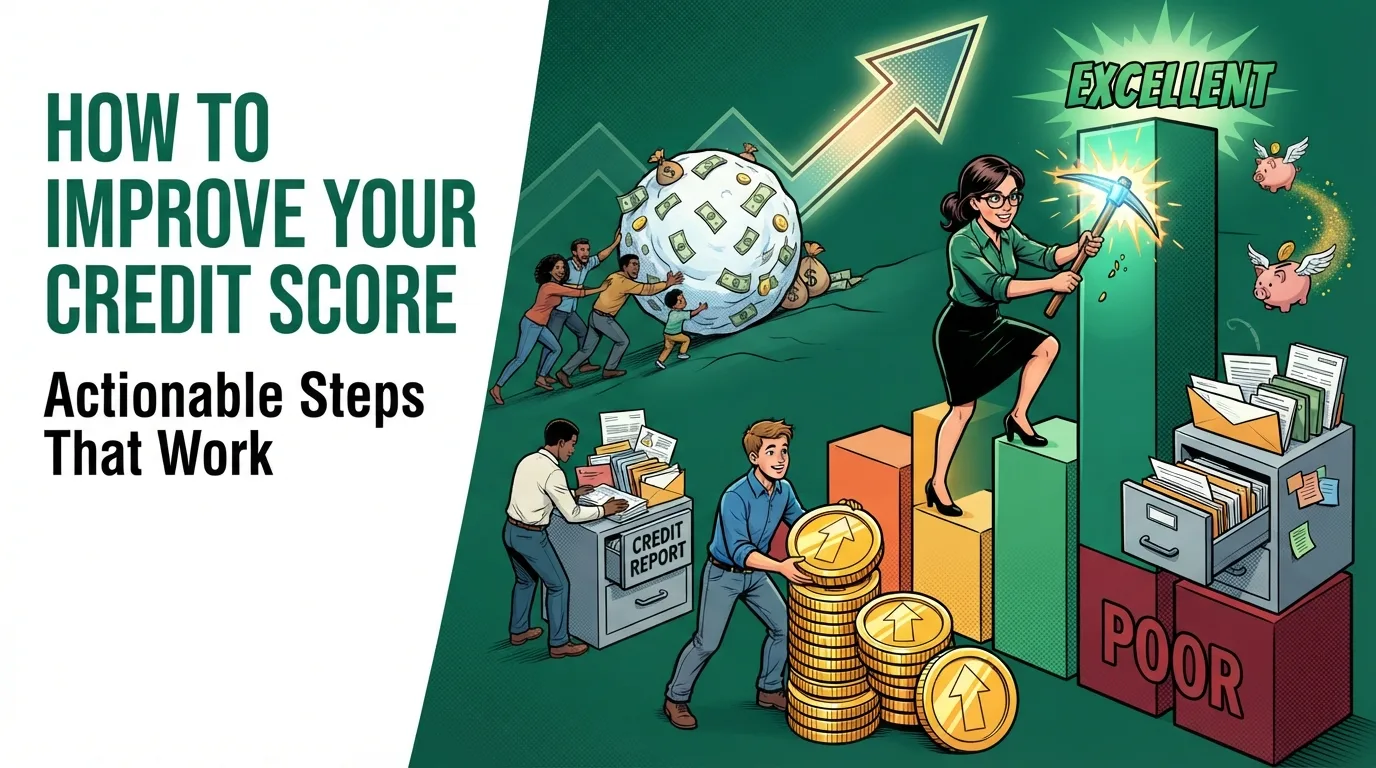
Your credit score is calculated from the information in your credit reports. If those reports contain errors—and they often do—your score could be unfairly lower. According to a 2021 study by the Federal Trade Commission, 1 in 5 consumers had a material error on at least one credit report. That's why the first step to improving your score is to review all three of your credit reports from Equifax, Experian, and TransUnion.
- How to get your reports: Visit AnnualCreditReport.com, the only federally authorized source for free weekly credit reports from all three bureaus (currently available through 2025).
- What to look for: Accounts that aren't yours, incorrect payment statuses, duplicate debts, outdated delinquencies (older than 7 years, or 10 for bankruptcies), and inaccurate credit limits or balances.
- How to dispute: If you spot an error, file a dispute with the credit bureau reporting it. You can do this online, by phone, or by mail. The bureau must investigate within 30 to 45 days. You can also dispute directly with the data furnisher (e.g., your credit card issuer).
Even if your reports are error-free, reviewing them helps you understand what's driving your score. You'll know which accounts to focus on and what behaviors to adjust.
2. Pay Your Bills on Time, Every Time
Payment history is the single most influential factor in your credit score, accounting for about 35% of a FICO Score and 41% of a VantageScore. Lenders care most about whether you've repaid borrowed money on time. Late payments, collections, and bankruptcies can stay on your report for years.
- Set up automatic payments: At minimum, make the minimum payment on every credit account automatically. But aim to pay the full statement balance if you can.
- Use calendar reminders: If you prefer manual control, set due-date alerts on your phone or through your online banking.
- Know your grace period: Most credit card issuers offer a 21-day grace period after the statement closes. Paying by the due date ensures no interest and no late mark.
- Catch up on delinquencies: If you've missed payments, bring them current as soon as possible. The longer a payment is late, the more damage it does. Some lenders may work with you to update your status after a few on-time payments.
If you've never had a credit account or have thin credit, consider a secured credit card or becoming an authorized user on someone else's account—both can help build a positive payment history.
3. Reduce Your Credit Utilization Ratio
Credit utilization—how much of your available credit you're using—is the second most important factor in scoring models, typically making up 30% of a FICO Score. It's calculated by dividing your total credit card balances by your total credit limits. For example, if you have a card with a $5,000 limit and a $2,000 balance, your utilization is 40%.
- Keep utilization below 30%: This is the general rule of thumb for a good score. But the lower, the better—many experts recommend staying under 10% for optimal scores.
- Pay down balances strategically: If you carry multiple cards, focus on paying down the ones with the highest utilization relative to their limits, because scoring models may look at per-card utilization as well as overall.
- Request credit limit increases: If your income has grown or you've established a record of on-time payments, you can ask your existing issuers for a credit limit increase. This can instantly lower your utilization—just don't use that extra room to spend more.
- Avoid closing old cards: Closing a card reduces your total available credit, which can raise your utilization. Even if you don't use an old card, keeping it open helps your score.
- Pay down before the statement date: Utilization is usually reported to the bureaus when your statement is generated. If you pay your balance down before that date, you can report a lower balance, which can help your score.
4. Build Credit History Responsibly
Beyond payment history and utilization, your credit score rewards longevity, mix, and restraint when it comes to new credit.
- The age of credit (15% of FICO): Lenders like to see a long, stable history. The average age of your accounts factors in. So keep your oldest accounts open—even if you no longer use them. Don't open multiple new accounts at once, which will drag down your average account age.
- Credit mix (10% of FICO) : Having a variety of credit types—revolving accounts like credit cards and installment loans like auto or student loans—can benefit your score. However, don't take on debt you don't need just to boost this factor. It's a small portion of the score.
- New credit inquiries (10% of FICO): Each time you apply for credit, a hard inquiry appears on your report and can temporarily knock a few points off your score. Rate-shopping for a mortgage or auto loan is treated as a single inquiry if done within a 14-to-45-day window, so consolidate your applications. Otherwise, apply only when necessary and space out new credit applications.
If you're new to credit or rebuilding, consider these tools:
- Secured credit cards: These require a security deposit, which becomes your credit limit. They work like regular cards and report to the bureaus.
- Credit-builder loans: Offered by credit unions and online lenders, these hold your loan amount in a savings account while you make payments, and the payments are reported to the bureaus.
- Become an authorized user: Piggybacking on a family member's well-managed card can help you inherit a positive payment history. Just make sure the primary cardholder has good habits.
- Use a co-signer: If you can't qualify on your own, a co-signer with good credit can help you get approved for an installment loan or card. Both parties are responsible for the debt, so make sure you can repay.
Bottom Line
Improving your credit score is not an overnight fix. It requires patience, precision, and consistent positive financial behavior. Start by pulling your credit reports and correcting any errors. Then, focus on the two factors that matter most: paying every bill on time and keeping your credit utilization low. Build your history over time by managing your accounts responsibly, avoiding unnecessary credit inquiries, and maintaining a healthy mix of credit. As your score climbs, you'll unlock better interest rates, higher approval odds, and peace of mind. Don't chase quick fixes—those rarely work and can be risky. Instead, commit to these proven strategies, and you'll see measurable progress within a few months to a year.
Remember, credit building is a marathon, not a sprint. Every on-time payment and low-balance month is a step toward a stronger financial future.
Frequently Asked Questions
How long does it take to improve a credit score?
Many positive changes, like paying down credit card balances or correcting a reporting error, can show up in your score within 30 to 45 days (after your lender reports the update). Derogatory marks like late payments or collections fall off after 7 years (10 for bankruptcies), but their impact fades as they age and your newer responsible behavior takes hold. Significant improvement is often visible within 3 to 6 months of consistent good habits.
Will checking my own credit report hurt my score?
No. Checking your own credit report or using a credit monitoring service involves a soft inquiry, which is not visible to lenders and has no impact on your score. Only hard inquiries, which occur when a lender reviews your credit in response to an application, can temporarily lower your score by a few points.
What is a good credit utilization ratio?
A good credit utilization ratio is generally below 30%, meaning you use less than a third of your available credit across all your cards. For the best scores, aim for 10% or lower, but remember to always pay at least the minimum on time. Utilization has no memory—it recalculates monthly, so you can improve it quickly by paying down balances.
References