How to Sell Your House: A Step-by-Step Guide for 2025
Selling your house is one of the most significant financial decisions you'll ever make. Whether you're upgrading, downsizing, or relocating, the process can be stressful—but it doesn't have to be. In this complete guide, you'll learn how to sell your house successfully, from preparing your home and setting the right price to marketing, negotiating, and closing. By following these proven steps, you can attract strong buyers, maximize your sale price, and minimize the anxiety often associated with selling a home.
Decide Whether to Hire an Agent or Sell Solo
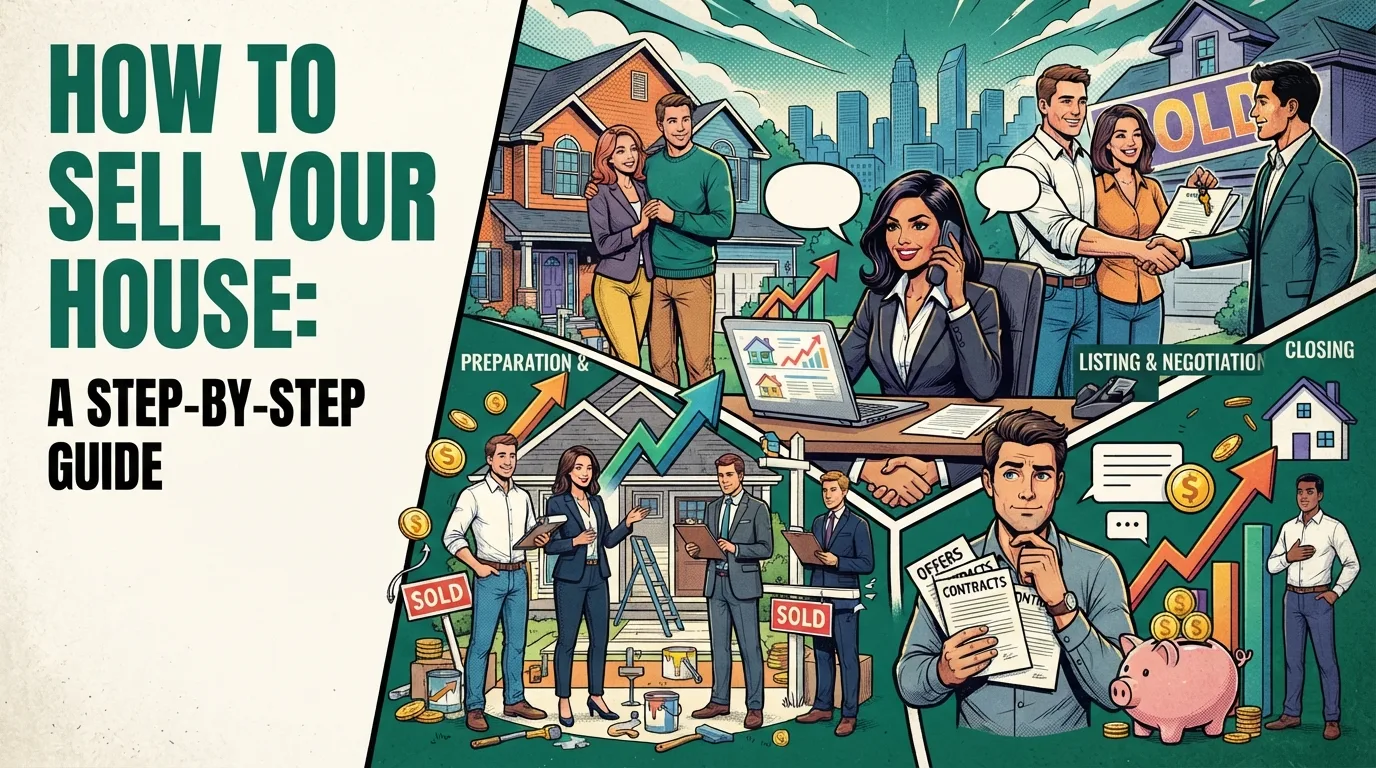
The first major decision is whether to work with a listing agent or sell by yourself (FSBO). Both paths have pros and cons.
Hiring a real estate agent
- Pros: Expertise in pricing, marketing, negotiation, and paperwork. Access to the Multiple Listing Service (MLS), which exposes your home to a wider pool of buyers. Professional guidance through disclosures and legal requirements.
- Cons: Commissions typically range from 5% to 6% of the sale price, split between the buyer's and seller's agents.
Selling FSBO
- Pros: You may save on the listing agent commission. You have full control over the process.
- Cons: You'll need to handle marketing, showings, negotiations, and all legal documents. Research shows FSBO homes often sell for less than agent-listed homes. According to the National Association of Realtors, the median selling price for FSBO homes was $310,000 in 2023, compared to $405,000 for agent-assisted sales, though FSBO homes are often less expensive to begin with.
If you're short on time or have a complicated home, an agent is often worth the cost. If you're an experienced seller and the market is strong, you may consider FSBO, but be prepared to invest significant time.
Prepare Your Home for the Market
Once you've chosen your selling strategy, turn your attention to making the house irresistible. It's a simple psychological fact: buyers who see a well-maintained home become emotionally attached and are willing to pay more.
Start with curb appeal. The exterior sets the first impression. Mow the lawn, trim bushes, repaint the front door, and replace exterior lighting that's broken. A fresh coat of paint on the facade can cost a few hundred dollars but can add thousands to the sale price.
Inside, focus on these tasks:
- Declutter and depersonalize: Remove family photos, personal collections, and excess furniture. Buyers need to envision themselves living there, not your memorabilia.
- Make minor repairs: Fix leaky faucets, patch holes, and replace cracked tiles. Attend to any obvious issues like a missing handrail.
- Stage rooms for purpose: Each room should have a clear function and a pleasant flow. If you have a home office, advertise it. If you have an awkward nook, consider adding a small desk or bookshelf.
- Clean professionally: Invest in a deep cleaning, including carpets, windows, and kitchen appliances.
- Consider a pre-sale home inspection: For a few hundred dollars, you can identify problems before a buyer's inspector finds them. Address major issues proactively or disclose them accurately. This can save you from deal-killing negotiations later.
Price Your Home Like a Pro
Pricing is the most important variable in the selling process. Price too high and your home will languish, becoming stale quickly. Price too low and you leave money on the table.
Start with a comparative market analysis (CMA), which looks at:
- Recent sales of similar homes in your area, especially within the last three months.
- Active and pending listings that serve as competition.
- The average days on market for your neighborhood, which indicates demand.
Your agent will run this, but you can also get a good idea using online tools like Zillow. However, automated valuations (Zestimate) are not always accurate, so rely on local knowledge too.
There are three common pricing strategies:
- Market value pricing: List at what you honestly expect to sell for. This attracts serious buyers and minimizes days on market.
- Competitive pricing: List slightly below market value to create a bidding war. This works best in hot markets with limited inventory.
- Overpricing: Rarely works. It encourages lowball offers and deters buyers who filter by maximum price. Homes that sit on the market often sell for less than those priced correctly from day one.
A good rule of thumb: The first two to three weeks on market are critical for generating the highest number of showings. Pricing competitively from the start can pay off.
Market Your Home Effectively
Your home needs to be seen. In today's digital world, 96% of buyers search online, so your listing deserves the best presentation possible.
- Hire a professional photographer: High-quality photos are non-negotiable. Listings with 20+ high-res images receive more clicks. Aerial drone shots and 3D tours can also set your home apart.
- Write a compelling description: Highlight your home's best features—the renovated kitchen, the extra bedroom, the location. Avoid vague language like "cozy" and be specific.
- Use the MLS: If you have an agent, expect broad syndication to major portals like Zillow, Trulia, and Redfin. If FSBO, you can list on FSBO sites or pay a flat fee to syndicate.
- Hold open houses and private showings: Open houses allow neighbors to see the home (and they might buy or know a buyer). Demonstrate flexibility with showing times for buyers and their agents.
- Leverage social media: Post the listing on Facebook, Instagram, and other local groups. Create a video tour and share it on YouTube.
Negotiate Offers and Manage Contingencies
When offers come in, your attorney or agent will help you evaluate more than just the price. You should consider:
- Financing type: Conventional, FHA, VA, or cash. Cash offers often close faster and have fewer contingencies.
- Contingencies: Common ones are home inspection, appraisal, and financing. The more you waive, the stronger the offer, but you also take on more risk.
- Timeline: When does the buyer want to close? Could you use a leaseback to stay after closing if you need more time?
Do not automatically accept the highest offer. A second offer with a larger earnest money deposit and fewer contingencies can be more reliable. Ask your agent to compare net proceeds after considering contingencies and additional costs.
After accepting an offer, the buyer will likely conduct a home inspection. Inspectors commonly find minor issues. Be prepared to negotiate. You have three options:
- Make the repairs requested.
- Offer a credit toward closing costs.
- Refuse, but risk the deal falling apart.
Many agents recommend focusing on structural or safety issues rather than nitpicking. If the market is strong, you can decline with confidence, but always seek professional advice.
Close the Sale
Between the offer and closing day, there are several steps to keep the deal on track.
- The buyer's lender will order an appraisal to confirm the home's value. If the appraisal comes in lower than the agreed price, you may need to renegotiate or the buyer may need to bring more cash.
- A title company or real estate attorney will perform a title search to clear any liens or issues.
- Plan for a final walkthrough, during which the buyer verifies the condition is the same as when they made the offer.
- Review the closing disclosure: It lists the final sale price, commission, and closing costs. Your proceeds will be minus any payoffs of your existing mortgage, property taxes, and transfer taxes.
- Expect to pay mortgage payoff, attorney fees, recording fees, and possibly transfer taxes. The average seller pays roughly 8% to 10% of the sale price in agent commissions and closing costs, though this varies.
On closing day, sign all documents, hand over the keys, and you're done. Congratulations, you've sold your house!
Bottom Line
Selling a house involves many moving parts, but breaking the process into logical steps makes it manageable. Start by deciding on your strategy, then invest in preparation and pricing. A well-presented, correctly priced home will attract buyers. Negotiate carefully and remain flexible. Throughout, lean on licensed professionals like an agent, real estate attorney, and title company to protect your interests. With the right approach, you'll sell your house on your terms and feel confident about the outcome.
Frequently Asked Questions
What is the best time of year to sell a house?
Spring is often the strongest selling season, thanks to warmer weather and families trying to move before the next school year. However, local conditions, such as inventory and interest rates, matter more than the calendar. In a seller's market, homes can sell quickly even in fall or winter. Analyze your local market with your agent to choose the optimum window.
How much does it cost to sell a house?
Sellers typically pay about 8% to 10% of the sale price in total selling costs. The largest item is the real estate agent commission (usually 5%–6%), followed by title insurance, attorney fees, transfer taxes, and any repairs or staging expenses. You'll also pay off your remaining mortgage and potentially capital gains taxes, though most primary residences are eligible for a $250,000 tax exclusion ($500,000 for married couples).
Should I sell my house myself or use an agent?
If you have time, experience, and a limited budget, selling for sale by owner (FSBO) can save you commissions. But agents bring market insight, negotiation skills, and online exposure that often results in a higher net price. According to NAR, agent-assisted homes sell for significantly more in many markets, which justifies the fee. Weigh the costs and benefits.
References