Budgeting doesn't mean eliminating all of life's little pleasures. It means making conscious decisions about where your money should go each month. A monthly budget gives you a short planning cycle to adjust, track, and improve your finances. The key is to find a system that fits your income pattern and personality. Below are practical monthly budget ideas you can adapt for your own situation.
Start With Your Fixed Costs and Income
Before you can allocate funds, you must know how much money is coming in. Calculate your monthly after-tax income using bank deposits, pay stubs, or payment apps. For those with inconsistent income, use the average of your last three months or the minimum you expect to earn.
Next, identify non-negotiable fixed costs. These usually include:
- Rent or mortgage
- Utility bills
- Insurance premiums
- Minimum debt payments
- Transportation costs (car payment, bus pass)
Write these down and subtract them from your income. The remaining balance is what you have for flexible categories such as food, clothing, and entertainment. If fixed costs consume more than half of your earnings, look for ways to reduce them, such as negotiating your internet bill or refinancing a high-interest loan.
Categorize and Trim Variable Spending
Variable spending is where budget leaks happen. Groceries, dining, subscriptions, and impulse purchases vary month to month and need clear limits. Start by tracking every transaction for at least seven days. You can use bank alerts, a mobile spending tracker, or a plain spreadsheet. Common waste streams include:
- Duplicate streaming services
- Daily takeout coffee
- Unused gym memberships
- Automatic renewals you forgot about
A powerful way to reduce these expenses is the rounding-up challenge: round each purchase to the nearest dollar and transfer the difference to savings. Another method is to set a weekly 'no-spend day' to break the habit of impulse buying. At the end of the month, evaluate which subscriptions you actually used and cancel the rest.
Try a Zero-Based Budget or Cash Envelope System
If you need a closer eye on every dollar, zero-based budgeting is one of the most beneficial monthly budget ideas. In this approach, total income minus total expenses and savings equals zero by the end of the month. Every dollar gets an assignment, whether it goes to rent, retirement, or eating out. This forces you to think about your priorities and prevents money from sitting in a checking account without purpose.
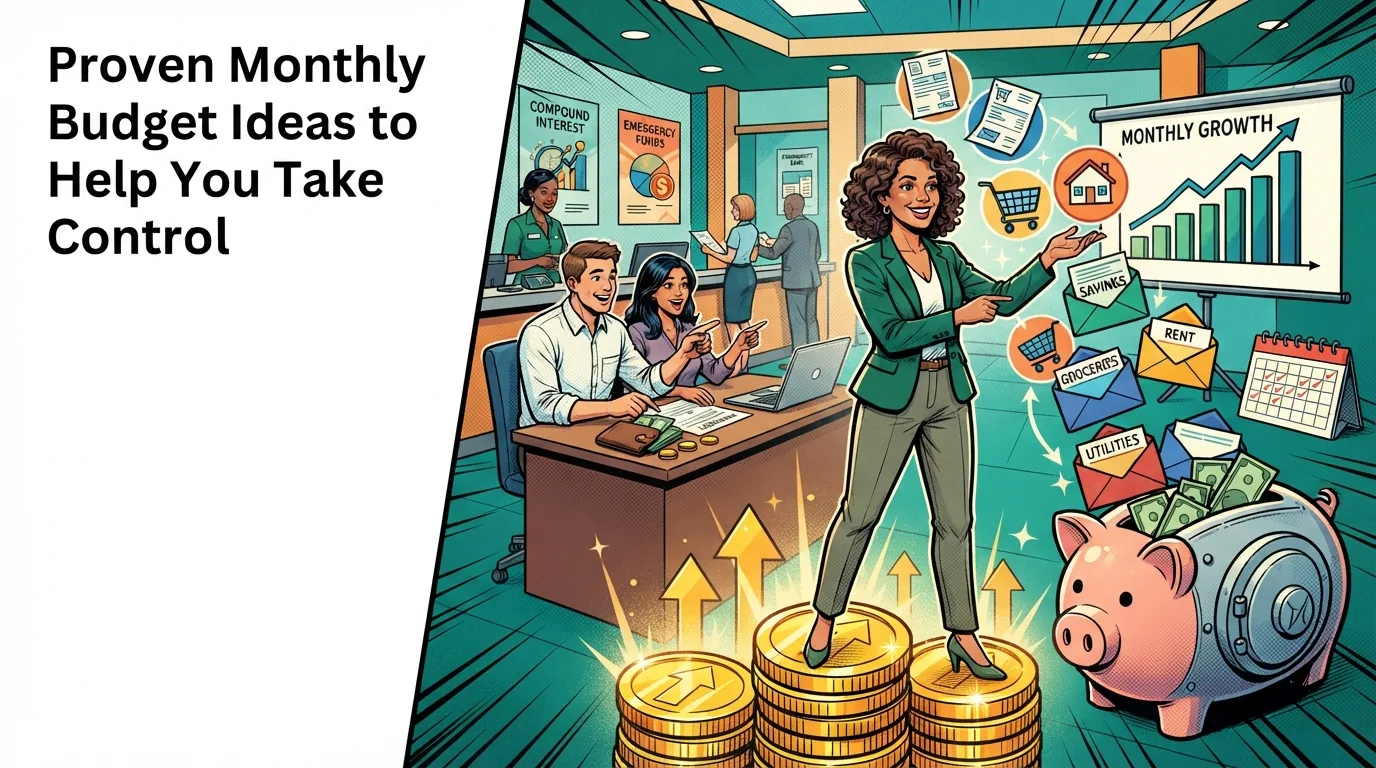
The related envelope system works especially well for overspenders. Withdraw cash each month and divide it into labeled envelopes for categories such as food, gas, and personal care. When an envelope is empty, you cannot spend any more in that category. You can use the same principle digitally by setting separate budget alerts for each category.
Use Proportional Budget Methods Like the 50/30/20 Rule
If a detailed budget feels exhausting, consider the 50/30/20 rule, popularized by U.S. Senator Elizabeth Warren. This method divides your after-tax income into three broad parts:
- 50% for needs
- 30% for wants
- 20% for savings and debt repayment
It provides structure without tracking every line item. You can automate your 20% savings through direct deposit, then use separate accounts for wants and needs. A similar framework is the pay-yourself-first plan: set a targeted savings rate (say, 15%) and transfer it at the beginning of the month. The rest of your paycheck can be spent with fewer limits as long as the savings goal is met.
Adjust for Irregular Income and One-Time Expenses
A monthly budget works best when you adapt it quickly. If you earn commissions, freelance income, or shift work, create a baseline budget from your lowest monthly income and keep any extra money in a separate savings buffer. When you have a higher-than-average month, use the surplus for debt payments or build your emergency fund before raising your normal spending.
Also plan for occasional expenses that do not fit a standard month, such as annual insurance premiums, vehicle registration, and holiday gifts. Divide these yearly costs by 12 and set aside that amount each month. You can keep a separate 'sinking fund' account to avoid surprises.
Review Your Actual Spending and Improve Next Month
At the end of every month, compare your planned budget with actual transactions. Look at categories where you overspent. Was it a one-time event or a persistent leakage? Ask yourself if your budget amounts are realistic. For example, if groceries keep exceeding your limit, you may need to shop at a more affordable store or use digital coupons.
Many people find it helps to do a 20-minute weekly check-in during which they reconcile receipts, update apps, and verify that all bills are paid. This prevents small oversights from turning into big problems. If your partner or family shares expenses, review the budget together so that everyone understands the spending rules.
Bottom Line
The best monthly budget ideas are those you can follow for more than a few weeks. Start by identifying your take-home income and fixed expenses. Then choose a budgeting method that reconciles with your personality: zero-based envelope budgeting for people who want complete control, or the 50/30/20 rule for a broad-based framework. Review your actual numbers every month and adjust categories accordingly. A budget is not about restriction; it is a tool to make your spending decisions intentional and to reduce financial stress in the long run.